 DogsLife
Breed profile
Boxer: size, sleep, exercise and care
A muscular, playful family dog that keeps its puppy energy for years. Boxers are loyal and funny, and they need plenty of exercise and structure.
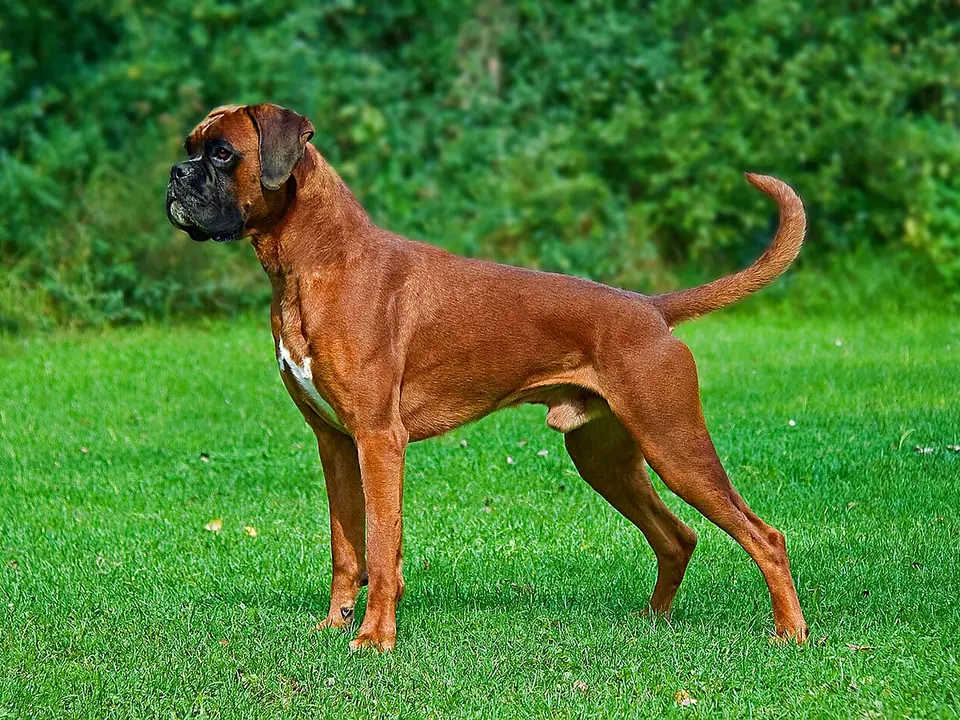
At a glance
- Size
- Large
- Adult weight
- 23–36 kg
- Height at the shoulder
- 55–64 cm
- Life expectancy
- 10–12 years
- Exercise needs
- High · 120+ min per day
Sleep needs
Typical total sleep per 24 hours, including naps.
| Puppy | Adult | Senior |
|---|---|---|
| 18–20 h | 12–14 h | 12–15 h |
These are general life-stage ranges for dogs from the AKC and Hill's; no study gives a separate figure for the Boxer. Individual dogs vary, and a sudden change in how much your dog sleeps is worth mentioning to your vet.
Exercise needs
PDSA recommends at least two hours of exercise a day and The Royal Kennel Club lists more than two hours. Mix walks with play and training, since boxers stay bouncy well into adulthood. Their muzzle is shorter than most large breeds, so keep hard exercise to the cooler parts of the day in summer.
Potty training
Boxer puppies are boisterous and easily distracted, so keep toilet trips boring: go to the same spot on a lead, wait quietly, then praise and play once the job is done.
They grow fast but still need puppy-level frequency in the first months: after waking, eating and play, and regularly in between.
Puppy potty schedule calculator →
Feeding
Use a large-breed puppy food and aim for steady growth rather than a heavy puppy. Feed three to four meals a day early on and two meals for adults.
Boxers are deep-chested, so bloat (GDV) is a known risk. The AKC notes that one meal a day doubles the risk compared with two meals, and a slow feeder helps dogs that gulp. Keep wild play away from mealtimes, and know the signs: a swollen, tight belly, restlessness and retching without bringing anything up need an emergency vet.
Frequently asked questions
How much exercise does a Boxer need?
At least two hours a day according to PDSA, and more than two hours according to The Royal Kennel Club.
Are Boxers prone to bloat?
As a deep-chested breed they are at higher risk. Feed at least two meals a day, slow down fast eaters and know the emergency signs.
Sources
- Boxer dog breed information — American Kennel Club
- Boxer: breed information and exercise — The Royal Kennel Club
- Boxer breed guide — PDSA
- Bloat (GDV) in dogs — American Kennel Club
- How much do puppies sleep? — American Kennel Club
- How much should my dog sleep per day? — Hill's Pet Nutrition
- Can senior dogs sleep too much? — American Kennel Club