 DogsLife
Breed profile
Labradoodle: size, sleep, exercise and care
The Labradoodle is a cross between a Labrador Retriever and a Poodle, not a breed with a kennel club standard, so size varies a lot with the parents. Greencross Vets gives roughly 35–60 cm and 7–30 kg across toy, miniature and standard types; Purina UK gives an even wider span, from about 5 kg to over 40 kg.
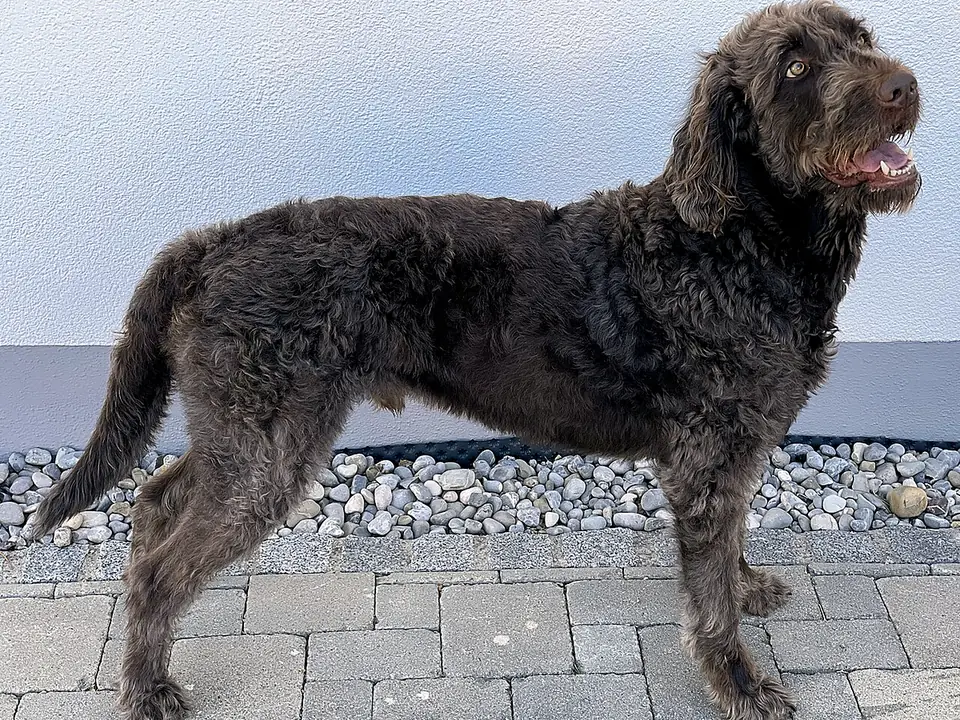
At a glance
- Size
- Medium
- Adult weight
- 7–30 kg
- Height at the shoulder
- 35–60 cm
- Exercise needs
- High · 30–120 min per day
Sleep needs
Typical total sleep per 24 hours, including naps.
| Puppy | Adult | Senior |
|---|---|---|
| 18–20 h | 12–14 h | 12–15 h |
These are general life-stage ranges for dogs from the AKC and Hill's Pet Nutrition; no kennel club publishes sleep figures for the Labradoodle specifically. Larger Labradoodles may sit at the top of the adult range, as Hill's notes that large dogs tend to sleep more than small ones.
Exercise needs
Sources disagree, mostly because Labradoodles come in such different sizes. Greencross Vets suggests 30 minutes to an hour a day, while Purina UK says Labradoodles will be happy with two hours or more, since both parent breeds are active. That is why the range above runs from 30 to 120 minutes: smaller, calmer dogs sit at the low end, large and energetic ones at the top. Fetch, swimming and training games suit most. Keep exercise gentle and short for puppies of the larger types while they grow.
Potty training
Labradoodle puppies are usually sociable and food-motivated, which makes reward-based house-training straightforward. Take the puppy out on waking, after meals, after play and before bed, and reward at the right spot.
Puppy size matters: a small toy or miniature Labradoodle has a smaller bladder and may need more frequent breaks than a standard-sized puppy of the same age. A puppy potty schedule helps you set intervals for your puppy's age.
Puppy potty schedule calculator →
Feeding
Feed for the adult size you expect, which your breeder can estimate from the parents. Small Labradoodles do well on a small-breed puppy food and several meals a day; larger ones need a large-breed puppy food and steady growth.
Both parent breeds love food, so measure meals and count treats. If your Labradoodle is large and deep-chested like a Standard Poodle, splitting food into at least two meals a day is a sensible habit.
Puppy feeding schedule calculator →
Life expectancy
There is no breed standard, so there is no official life-expectancy range to show above. Greencross Vets and Purina UK both say Labradoodles can live to around 14 years, and Purina adds that both parent breeds are long-lived.
Frequently asked questions
How big does a Labradoodle get?
It depends on the parents. Greencross Vets gives roughly 35–60 cm and 7–30 kg across the size types; individual dogs can fall outside that.
How much exercise does a Labradoodle need?
Anything from 30 minutes to two hours or more a day, depending on size and energy. Greencross Vets and Purina UK give different figures.
Is the Labradoodle a recognised breed?
No. It is a cross, and it is not on the breed lists of the AKC, the Royal Kennel Club or SKK, so there is no official size standard.
Sources
- Labradoodle Owner's Guide — Greencross Vets
- Labradoodle – dog breed information guide — Purina UK
- Poodle (Standard) dog breed information — American Kennel Club
- Poodle (Standard) breed information — The Royal Kennel Club
- How Much Do Puppies Sleep? — American Kennel Club
- How Much Should My Dog Sleep Per Day? — Hill's Pet Nutrition
- Can Senior Dogs Sleep Too Much? How Much Should Older Dogs Sleep? — American Kennel Club
- How to Potty Train a Puppy — American Kennel Club