 DogsLife
Breed profile
Weimaraner: size, sleep, exercise and care
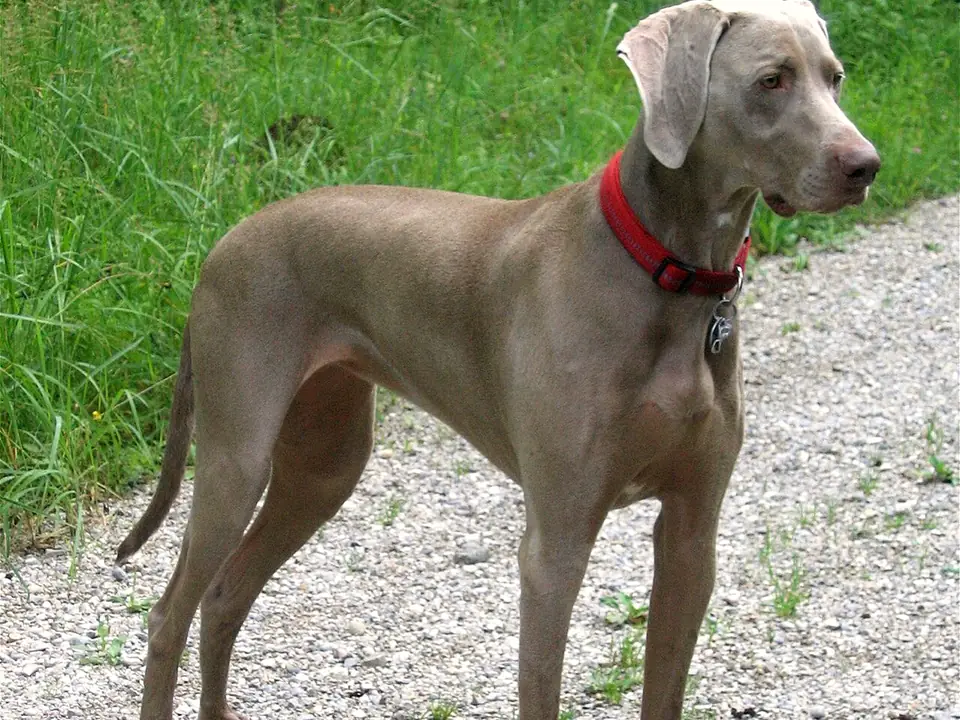
The Weimaraner is a tall, elegant grey gundog of 57–70 cm and 25–40 kg (SKK). It is lively, alert and stubborn but learns fast, and SKK describes it as a demanding hunting dog rather than a pure companion.
At a glance
- Size
- Large
- Adult weight
- 25–40 kg
- Height at the shoulder
- 57–70 cm
- Life expectancy
- 10–13 years
- Exercise needs
- Very high · 120+ min per day
Sleep needs
Typical total sleep per 24 hours, including naps.
| Puppy | Adult | Senior |
|---|---|---|
| 18–20 h | 12–14 h | 12–15 h |
These are general life-stage ranges for dogs from the AKC and Hill's Pet Nutrition; no kennel club publishes sleep figures for the Weimaraner specifically. An under-exercised Weimaraner rarely rests well. Plenty of activity plus a calm, consistent bedtime routine helps a young dog learn to switch off.
Exercise needs
The Royal Kennel Club puts the Weimaraner in its "more than 2 hours a day" band. SKK adds that exercise alone is not enough: hunting, obedience training or similar work is a must. Build up gradually in puppies, since SKK lists hip dysplasia in the breed.
Potty training
Weimaraner puppies learn quickly but test boundaries. Keep the schedule firm (out on waking, after meals, after play, before bed) and supervise closely indoors so you can interrupt and take the puppy out before an accident.
SKK describes a well-raised Weimaraner as affectionate and keen to work with you; a puppy left alone for long periods may struggle with both house-training and settling, so build alone time up slowly.
Puppy potty schedule calculator →
Feeding
The AKC names the Weimaraner among the breeds at greatest risk of bloat (gastric dilatation-volvulus). Feed at least two meals a day instead of one, use a slow feeder if your dog gulps, and keep mealtimes calm and separate from other dogs. Learn the signs (swollen belly, retching without result, restlessness) and treat them as an emergency. Ask your vet whether a preventive gastropexy is worth considering.
Puppies need a large-breed puppy food and steady growth, with three or four meals a day at first.
Frequently asked questions
Are Weimaraners prone to bloat?
Yes. The AKC lists them among the large breeds at greatest risk. Several smaller meals, slow eating and calm feeding help reduce the risk.
How much exercise does a Weimaraner need?
More than two hours a day according to the Royal Kennel Club, plus real work such as hunting or obedience training, as SKK recommends.
Sources
- Weimaraner, korthårig – rasbeskrivning — Svenska Kennelklubben (SKK)
- Weimaraner dog breed information — American Kennel Club
- Weimaraner breed information — The Royal Kennel Club
- Bloat in Dogs — American Kennel Club
- How Much Do Puppies Sleep? — American Kennel Club
- How Much Should My Dog Sleep Per Day? — Hill's Pet Nutrition
- Can Senior Dogs Sleep Too Much? How Much Should Older Dogs Sleep? — American Kennel Club
- How to Potty Train a Puppy — American Kennel Club