 DogsLife
Breed profile
Newfoundland: size, sleep, exercise and care
The Newfoundland is a gentle giant: males stand around 71 cm and adults weigh roughly 45–68 kg. It is calm, sweet-natured and loves water, but its size calls for careful growth, feeding and heat management.
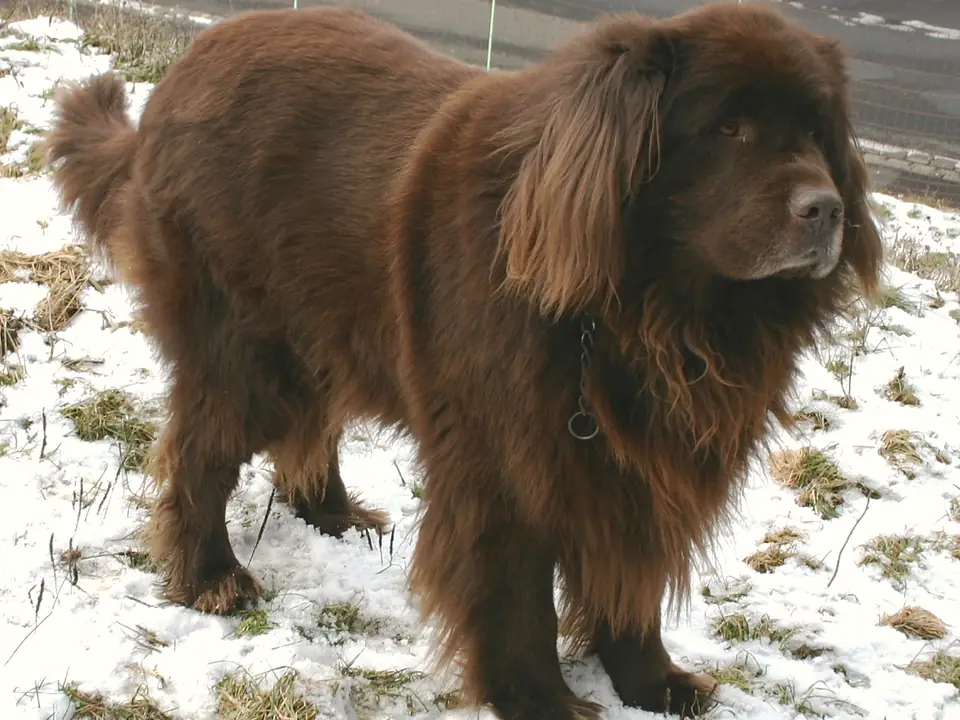
At a glance
- Size
- Giant
- Adult weight
- 45–68 kg
- Height at the shoulder
- 66–71 cm
- Life expectancy
- 9–10 years
- Exercise needs
- Moderate · 30–60 min per day
Sleep needs
Typical total sleep per 24 hours, including naps.
| Puppy | Adult | Senior |
|---|---|---|
| 18–20 h | 12–14 h | 12–15 h |
These are general life-stage ranges for dogs from the AKC and Hill's Pet Nutrition; no kennel club publishes sleep figures for the Newfoundland specifically. Expect a Newfoundland to sit at the top end of these ranges: the AKC notes that some large and giant breeds can sleep up to 18 hours a day even in middle age, and Hill's lists the Newfoundland among the breeds known for long rests.
Exercise needs
The Royal Kennel Club guideline is up to an hour of exercise a day. Steady walks and swimming suit the breed better than running. Keep a growing puppy's exercise short and low-impact, because SKK lists hip and elbow dysplasia in the breed. The thick double coat makes warm days hard, so walk early and late in summer.
Potty training
A Newfoundland puppy grows fast, and so do its puddles. Take it out after every nap, meal and play session, first thing in the morning and last thing at night, and praise generously; these dogs are sensitive and respond best to gentle training.
Teach a reliable routine early. Carrying an 8-week-old puppy outside is easy, but a five-month-old Newfoundland already weighs as much as many adult dogs.
Puppy potty schedule calculator →
Feeding
Large, deep-chested dogs carry a higher risk of bloat (gastric dilatation-volvulus), an emergency in which the stomach fills with gas and can twist. The AKC's bloat article points to a few practical habits: feed at least two meals a day rather than one big one, slow down fast eaters with a slow-feeder bowl, and keep mealtimes calm. Learn the warning signs (a swollen belly, retching without bringing anything up, restlessness) and call a vet at once if you see them.
Giant-breed puppies should grow slowly and stay lean. Use a food made for large-breed puppies and ask your vet or breeder how much to feed as the puppy grows.
Frequently asked questions
How much do Newfoundlands sleep?
Adult dogs generally sleep about 12–14 hours a day, and large breeds like the Newfoundland often rest even more. A sudden change in sleep pattern is worth a vet check.
How should I feed a Newfoundland to reduce bloat risk?
Split the daily food into at least two meals, slow down fast eating and keep meals calm. Know the signs of bloat and treat them as an emergency.
How much exercise does a Newfoundland need?
Up to about an hour a day according to the Royal Kennel Club, with gentle, low-impact exercise for puppies.
Sources
- Newfoundlandshund – rasbeskrivning — Svenska Kennelklubben (SKK)
- Newfoundland dog breed information — American Kennel Club
- Newfoundland breed information — The Royal Kennel Club
- Bloat in Dogs — American Kennel Club
- How Much Do Puppies Sleep? — American Kennel Club
- How Much Should My Dog Sleep Per Day? — Hill's Pet Nutrition
- Can Senior Dogs Sleep Too Much? How Much Should Older Dogs Sleep? — American Kennel Club
- How to Potty Train a Puppy — American Kennel Club