 DogsLife
Guide
How much should a puppy sleep? Hours by age
Young puppies sleep most of the day: around 15–20 hours at 4–12 weeks, about 14–16 hours at 3–6 months, then moving towards an adult 12–14 hours.
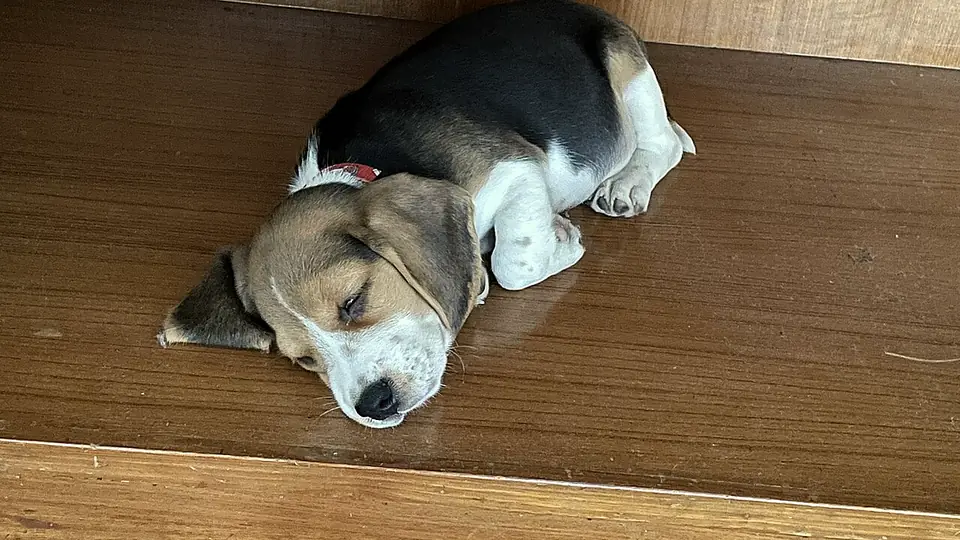
Puppies need a lot of sleep: the Royal Kennel Club gives around 15–20 hours a day for puppies aged 4–12 weeks, about 14–16 hours at 3–6 months, and around 12–14 hours from 6 months as they move towards an adult pattern. The AKC, PDSA and Dogs Trust all describe 18–20 hours as typical for young puppies. Most of that is made up of short naps spread through the day, plus a longer stretch at night.
Puppy sleep hours by age
| Age | Typical sleep per 24 hours |
|---|---|
| Newborn (0–2 weeks) | Around 90% of the time |
| 2–4 weeks | 18–20 hours |
| 4–12 weeks | 15–20 hours |
| 3–6 months | 14–16 hours |
| Over 6 months | Around 12–14 hours (adult-like) |
Source: The Royal Kennel Club. Individual puppies vary; size, breed, health and how busy the day was all play a part.
A puppy that has just come home at around 8 weeks old is right in the 15–20 hour band. If your new puppy seems to do little more than eat, toilet, play briefly and sleep, that is exactly what you'd expect. Our puppy sleep calculator gives a quick estimate for your puppy's age.
| Age | Sleep per 24 hours |
|---|---|
| 2–4 weeks | 18–20 h |
| 4–12 weeks | 15–20 h |
| 3–6 months | 14–16 h |
| Over 6 months | around 12–14 h |
Source: The Royal Kennel Club, as in the table above. Individual puppies vary; size, breed, health and how busy the day was all play a part.
Why puppies sleep so much
Sleep is when a lot of growing happens. The Royal Kennel Club lists physical growth, brain development (processing everything the puppy has experienced), recharging after play, the release of growth hormone during deep sleep, and digestion as reasons puppies sleep so much. The AKC adds that sleep supports the development of the central nervous system, brain, immune system and muscles.
In other words, sleep isn't time "lost" from training or socialising. It's part of how those lessons stick.
What puppy sleep looks like in a day
Puppies don't sleep in one long block. According to the AKC, young puppies may nap every hour or so, with naps lasting from about 30 minutes to two hours. A typical rhythm is: wake up, potty break, a short burst of food, play or training, another potty break, then sleep again.
Night sleep gets longer as your puppy grows, but very young puppies usually still need a toilet trip during the night. For a practical day plan, see our puppy nap schedule.
Signs your puppy isn't getting enough sleep
Many owners assume a wild, bitey puppy needs more exercise. Often it's the opposite. Dogs Trust explains that when puppies don't get enough sleep they often show it as zoomies, wanting to play and mouthing, and that a puppy which has been fed, been to the toilet and had plenty to do is probably overtired. In practice that can look like:
- mouthing and nipping that gets harder to redirect;
- frantic play or zoomies that escalate instead of winding down;
- restlessness and trouble settling, which the Royal Kennel Club also lists as worth watching.
Our guide to the overtired puppy covers how to spot and settle it.
How to help your puppy sleep well
- Give it a quiet, comfortable spot. The Royal Kennel Club recommends a cosy corner that is quiet, safe and comfortable. Dogs Trust suggests a quiet area with a bed and access to water.
- Keep a regular routine. Regular times for meals, play, toilet trips and sleep make it easier for your puppy to settle, according to the Royal Kennel Club.
- Schedule naps, don't wait for a crash. Dogs Trust recommends scheduling regular power naps and longer sleeps through the day.
- Wind down after activity. A calm few minutes, a chew or a lick mat (Dogs Trust suggests long-lasting chews) can help your puppy switch off after play.
- Let sleeping puppies lie. The PDSA advises trying not to wake your puppy when it's sleeping. Make sure children and visitors know the bed is a "do not disturb" zone.
- Keep night trips dull. If your puppy needs a toilet trip at night, keep the light low and go straight back to bed afterwards.
Tracking sleep: what's normal for your puppy
Because the range is so wide (15–20 hours covers a lot of puppies), it helps to know your own puppy's baseline. Logging naps and night sleep for a week shows how much your puppy actually sleeps and when it tends to get tired. DogsLife does this with a simple sleep log; over time it learns your puppy's rhythm and suggests when the next nap is likely due, which makes planning walks, visitors and training much easier.
When to ask your vet
The Royal Kennel Club suggests getting advice if you notice:
- a sudden change in your puppy's sleep pattern;
- a puppy that seems excessively tired, or one that refuses to sleep;
- restlessness and trouble settling that doesn't improve with a calmer routine;
- any difficulty breathing while asleep or awake.
If your puppy is lethargic when awake (not interested in food or play), call your vet rather than putting it down to normal puppy sleepiness.
Frequently asked questions
Is it normal for my puppy to sleep 20 hours a day?
Yes, for a young puppy. The AKC, PDSA and Dogs Trust all put typical puppy sleep at around 18–20 hours a day, and the Royal Kennel Club gives 15–20 hours for puppies aged 4–12 weeks.
How much does a 4-month-old puppy sleep?
The Royal Kennel Club gives about 14–16 hours a day for puppies aged 3–6 months, made up of night sleep plus several daytime naps.
Should I wake my puppy up to play or train?
Generally no. The PDSA advises trying not to wake a sleeping puppy, and Dogs Trust recommends scheduling naps so your puppy doesn't become overtired. The exception is a planned potty trip at night.
When should I worry about my puppy's sleep?
The Royal Kennel Club suggests contacting your vet about sudden changes in sleep, a puppy that seems excessively tired or refuses to sleep, restlessness, or any difficulty breathing.
How much does a 10-week-old puppy sleep?
Still most of the day: the Royal Kennel Club gives 15–20 hours for puppies aged 4–12 weeks. The 10-week-old puppy schedule shows how naps fit around meals and toilet trips.
Sources
- Why does my puppy sleep so much? — The Royal Kennel Club
- How much do puppies sleep? — American Kennel Club
- Mouthing, nipping and puppy biting — Dogs Trust
- Helping a hyper or restless dog to calm down — Dogs Trust
- Your first day (and night) with a new puppy — PDSA