 DogsLife
Guide
Puppy nap schedule: a sample day that works
Young puppies may nap every hour or so, for 30 minutes to two hours at a time. Build the day as a repeating loop: wake, potty, eat or play, potty, nap.
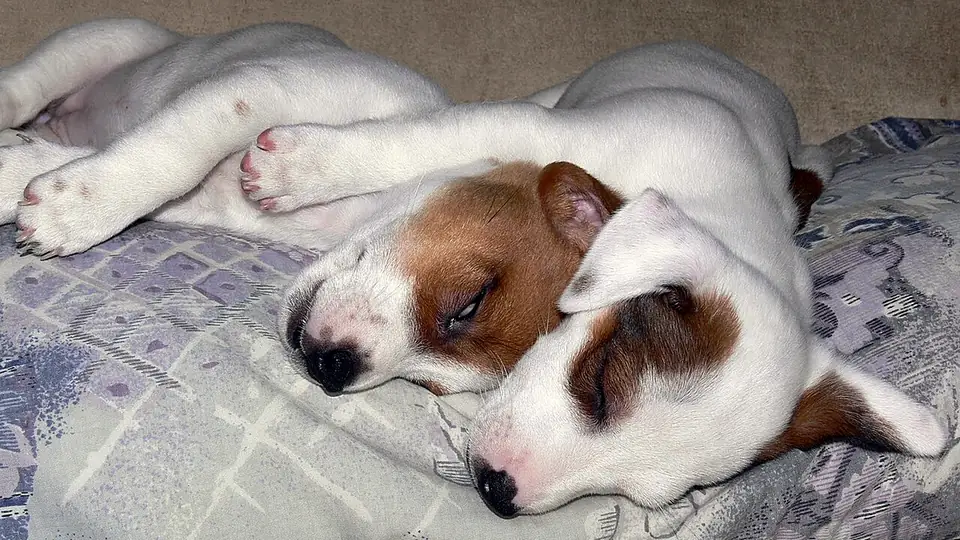
Young puppies may nap every hour or so, with naps lasting anywhere from about 30 minutes to two hours (AKC). The easiest way to schedule them is a repeating loop: wake up, potty break, a short spell of food, play or training, another potty break, then a nap. Repeat that loop through the day, with one long sleep at night. As your puppy grows and needs less sleep, the awake spells get longer and the naps fewer.
How much nap time is your puppy aiming for?
The Royal Kennel Club gives these total sleep needs per 24 hours:
| Age | Total sleep per day |
|---|---|
| 4–12 weeks | 15–20 hours |
| 3–6 months | 14–16 hours |
| Over 6 months | Around 12–14 hours |
Night sleep covers a good part of that, and naps make up the rest. For most young puppies that means several daytime naps. Our puppy sleep calculator gives an estimate for your puppy's exact age, and how much should a puppy sleep explains why it needs so much.
| Age | Total sleep per day |
|---|---|
| 4–12 weeks | 15–20 h |
| 3–6 months | 14–16 h |
| Over 6 months | around 12–14 h |
Source: The Royal Kennel Club, as in the table above. Night sleep covers a good part of it, and naps make up the rest.
The nap loop
Every block of the day follows the same pattern:
- Wake up → straight outside. The Royal Kennel Club says puppies need to urinate immediately after waking.
- Food, play, training or a short outing. Keep it short: the AKC recommends several shorter play sessions over one long one.
- Potty break. The AKC suggests a trip out after every change of activity; after a meal, puppies usually wee within about fifteen minutes (Royal Kennel Club).
- Wind down and nap. The AKC notes that puppies are likely to be ready for a nap after playtime or a walk. Guide your puppy to its bed before it gets overtired.
Dogs Trust recommends scheduling regular power naps and longer sleeps through the day rather than waiting for your puppy to crash. A puppy that's allowed to keep going often becomes the wild, nippy puppy described in our overtired puppy guide.
Sample day for a young puppy (around 8–12 weeks)
This is an example, not a prescription. Times are illustrative; shift them to fit your household and your puppy's own rhythm. Most puppies this age eat three meals a day (AKC); our feeding schedule tool can help you plan meals.
| Time | What happens |
|---|---|
| 07:00 | Wake up, potty break |
| 07:15 | Breakfast, then potty break |
| 07:45 | Short play or training |
| 08:15 | Potty break, then nap |
| 10:00 | Wake up, potty break, short play or outing |
| 11:00 | Potty break, then nap |
| 12:30 | Wake up, potty break, lunch, potty break |
| 13:15 | Quiet play or chew |
| 13:45 | Potty break, then nap |
| 15:30 | Wake up, potty break, play or short socialising trip |
| 16:30 | Potty break, then nap |
| 17:30 | Wake up, potty break, dinner, potty break |
| 18:30 | Calm family time, short play |
| 19:30 | Potty break, then nap |
| 21:00 | Wake up, potty break, quiet time |
| 22:30 | Last potty break, bed |
| Night | One or more quiet potty trips if needed |
Notice the pattern rather than the minutes: short awake spells, a potty break at every transition, and a nap after every burst of activity. If your puppy wakes earlier or naps longer, just slide the loop along.
Adjusting the schedule as your puppy grows
As total sleep drops (to around 14–16 hours at 3–6 months, per the Royal Kennel Club), you'll see:
- longer awake spells between naps, with more room for walks and training;
- fewer but longer naps, often settling into a morning and an afternoon nap;
- a longer night, as night-time potty trips become unnecessary.
Let your puppy lead. If it's getting wild or bitey at a certain time of day, add a nap before that point. If it's lying awake in its bed for a long time, it may be ready for a slightly longer awake spell.
Tips for naps that actually happen
- Same place, same cues. A quiet, comfortable spot (the Royal Kennel Club suggests a cosy corner that is quiet, safe and comfortable) and the same calm wind-down every time.
- Make it dull. Lower your voice, remove toys, and offer a chew if it helps your puppy settle.
- Protect nap time. Make sure children and visitors know to leave a sleeping puppy alone.
- Spread the fun out. Several short sessions across the day are easier on a puppy than one busy evening.
- Crates and pens depend on where you live. The AKC describes crates as a den-like nap spot, but rules vary: in Sweden, a dog may not be shut in a crate indoors (SKK). A bed in a quiet corner works everywhere.
Find your puppy's real rhythm
A sample schedule is a starting point; your puppy's real pattern is what matters. After a few days of logging naps, meals and potty breaks you'll see when your puppy naturally gets tired and how long it really sleeps. In DogsLife that's one tap per event, and the app learns the rhythm and predicts when the next nap and potty break are likely due, so the schedule adapts to your puppy instead of the other way round.
When to ask your vet
The Royal Kennel Club suggests asking for advice if your puppy's sleep pattern changes suddenly, if it seems excessively tired or refuses to sleep, if it is persistently restless, or if it has any difficulty breathing.
Frequently asked questions
How many naps a day does a puppy need?
Young puppies nap many times a day. The AKC says they may nap every hour or so, with naps lasting from 30 minutes to two hours. The number falls as total sleep drops with age.
How long should a puppy nap?
According to the AKC, typical puppy naps last anywhere from about 30 minutes to two hours. Let your puppy wake naturally where possible rather than cutting naps short.
Should I wake my puppy from a nap to go potty?
Usually there's no need: puppies need to wee as soon as they wake, so take them out then. The exception is a planned night-time trip for a very young puppy.
Should naps be in a crate or pen?
A quiet, consistent spot is what matters. Rules on crates vary by country (in Sweden, dogs may not be shut in crates indoors), so a calm bed in a quiet corner works anywhere.
Sources
- How much do puppies sleep? — American Kennel Club
- Puppy schedule: daily routine for new puppies — American Kennel Club
- Why does my puppy sleep so much? — The Royal Kennel Club
- How do I toilet train my dog? — The Royal Kennel Club
- Mouthing, nipping and puppy biting — Dogs Trust