 DogsLife
Guide
How long can a puppy or dog be left alone? By age
A puppy can be left for roughly one hour per month of age, up to about 6 hours at 6 months. For adult dogs, the RSPCA, PDSA and Dogs Trust all put the routine limit at about four hours.
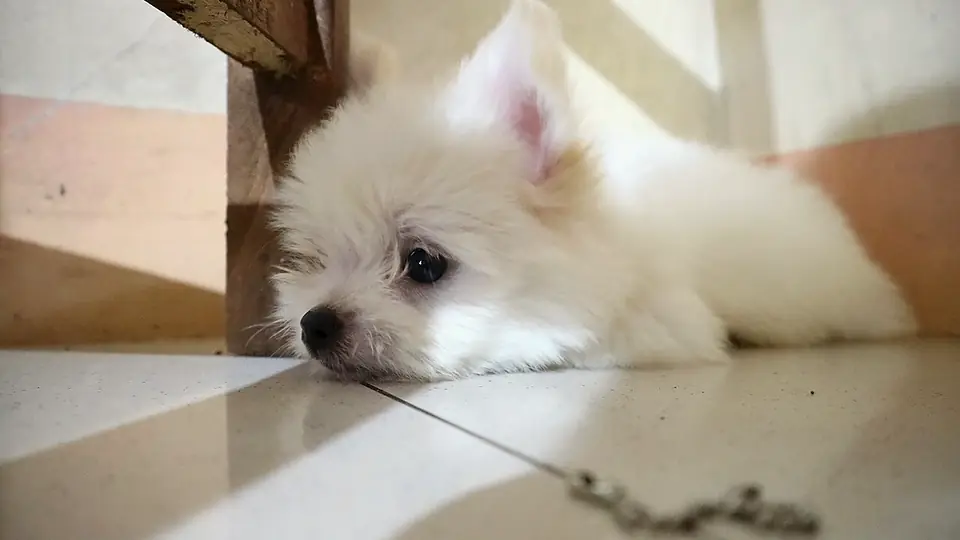
A puppy can usually be left alone for about one hour per month of age: roughly 1 hour under 10 weeks, 3 hours at 3 months and up to 6 hours at 6 months (American Kennel Club). For adult dogs, the RSPCA, PDSA and Dogs Trust all recommend no more than about four hours alone on a regular basis. These are limits for a dog that has been taught to be alone, not targets, and every dog is different.
How long a puppy can be left alone, by age
The AKC gives this age guide. It matches the bladder rule of thumb in our guide on how often a puppy needs to pee: about one hour per month of age.
| Age | Maximum time alone | Source |
|---|---|---|
| Under 10 weeks | About 1 hour | AKC |
| 10–12 weeks | About 2 hours | AKC |
| 3 months | About 3 hours | AKC |
| 4 months | About 4 hours | AKC |
| 5 months | About 5 hours | AKC |
| 6 months | About 6 hours | AKC |
| Over 6 months | 6–8 hours at most | AKC |
| Any dog, routinely | About 4 hours | RSPCA, PDSA, Dogs Trust |
Treat the puppy rows as an upper limit. The PDSA notes that four hours would generally be too long for a very active young puppy, and a puppy that has just eaten, drunk or played will need the toilet much sooner.
| Age | Hours alone (maximum) |
|---|---|
| Under 10 weeks | 1 h |
| 10–12 weeks | 2 h |
| 3 months | 3 h |
| 4 months | 4 h |
| 5 months | 5 h |
| 6 months | 6 h |
| Over 6 months | 6–8 h at most |
Source: American Kennel Club, as in the table above. These are upper limits for a puppy that has been trained to be alone; UK charities recommend no more than about four hours routinely for any dog.
How long can an adult dog be left alone?
UK welfare charities agree on about four hours. The PDSA calls four hours "the longest that dogs should routinely be left alone", while adding that every dog is different. The RSPCA gives the same figure and asks owners never to leave a dog long enough to become distressed. Dogs Trust also says four hours, and suggests someone to check in, or doggy day care, if you will be out longer.
The AKC's ceiling is a little higher: even adult dogs shouldn't be home alone for much longer than six to eight hours without a chance for a toilet break. If you work full days, plan for a midday walk, whether that's you coming home at lunch, a neighbour or a dog walker.
How to teach a puppy to be alone
Dogs Trust says teaching a dog to cope alone should ideally start while it is still a puppy. The PDSA and Dogs Trust describe a similar step-by-step method:
- Give your puppy a safe resting place, such as a comfy bed or a den area.
- Practise while you're home. Walk a short distance away, return and reward calm behaviour. Then leave the room briefly and come back.
- Use a baby gate so your puppy can see, hear and smell you while it learns to be apart from you.
- Leave something to do. A long-lasting chew or food toy helps; the RSPCA suggests letting your dog use it while you're home first.
- Build up slowly. Lengthen the time apart little by little, then start short absences from the house.
- Keep comings and goings low-key, and make time apart a normal part of every day.
Before longer absences, the RSPCA suggests a walk and a toilet break, plus a small meal or food toy so your dog isn't hungry. If your puppy shows signs of worry, Dogs Trust's advice is to go back a step and progress more slowly.
Signs your dog struggles when left alone
The RSPCA lists these common signs of separation-related behaviour:
- destructive chewing, often near doors, exits or windows;
- howling, barking or whining;
- toileting indoors;
- excessive excitement when you come back, or anxiety before you leave.
Easier to miss are trembling, panting, drooling, pacing or circling, licking or biting itself, vomiting, and not eating while you're out. The RSPCA says signs usually start within a few to 30 minutes of being left, and that half of affected dogs show no obvious signs while their owners are around, so a camera can be useful.
What not to do: never punish your dog when you come home. The RSPCA and Dogs Trust both say scolding can increase anxiety, and the RSPCA warns against letting a dog "cry it out", as it can teach that being alone is frightening. If things don't improve, the PDSA recommends a vet check first, then an accredited behaviourist.
Rules in Sweden and Finland
Some countries put parts of this into law. Check the rules where you live.
Sweden. Under Jordbruksverket's regulations on keeping dogs and cats (SJVFS 2020:8), dogs must be taken outdoors every day, must normally be checked at least twice a day, and must be gradually used to being left alone, with extra care for young dogs and dogs that show distress. The well-known "six-hour rule" is general advice: Jordbruksverket says you should (bör) let your dog out at least every six hours during the day, and puppies and older dogs more often.
Finland. The decree on the protection of dogs, cats and other small companion animals (674/2010), which Ruokavirasto says still applies for now, requires that an adult dog is taken outside daily, often enough, with special attention to its need for exercise. We found no fixed number of hours in it.
Make your plan from your own dog's day
Tables give you a starting point, but your dog's real limit depends on its age, bladder, energy and how well it has learned to settle. Note when you leave, when your dog last peed and how it was when you came home. A week of notes shows you whether 3 hours is comfortable or already too long. Our puppy potty schedule tool can help you place toilet breaks around the time you're away.
Frequently asked questions
Can I leave an 8-week-old puppy alone?
Only very briefly. The AKC suggests no more than about 1 hour for a puppy under 10 weeks, and only once you have practised short absences while you are at home. In the first days, aim for minutes, not hours.
Can I leave my dog alone while I work a full day?
Not without help. The RSPCA, PDSA and Dogs Trust recommend no more than about four hours alone routinely, and the AKC says even adult dogs shouldn't go much longer than 6–8 hours without a toilet break. A dog walker, a neighbour or doggy day care can split the day.
Is it illegal to leave a dog alone for more than 6 hours in Sweden?
Partly. Swedish rules say dogs must be gradually used to being left alone and must normally be checked at least twice a day. Walking a dog at least every six hours during the day, and more often for puppies and old dogs, is Jordbruksverket's general advice (bör), not a strict requirement.
How do I know if my dog struggles when left alone?
Look for barking, howling or whining, chewing near doors or windows, toileting indoors, pacing, panting or drooling. The RSPCA says these signs usually start within a few to 30 minutes of you leaving, so a camera can show what you would otherwise miss.
Sources
- How long can a puppy be left alone? — American Kennel Club
- Separation-related behaviour in dogs — RSPCA
- Dogs need company — RSPCA
- Home alone: preventing separation anxiety — PDSA
- How to help your dog get used to spending time alone — Dogs Trust
- Så sköter du din hund — Jordbruksverket
- Statens jordbruksverks föreskrifter och allmänna råd om hållande av hundar och katter (SJVFS 2020:8) — Jordbruksverket (via lagen.nu)
- Valtioneuvoston asetus koirien, kissojen ja muiden pienikokoisten seura- ja harrastuseläinten suojelusta (674/2010) — Finlex
- Koirat ja kissat — Ruokavirasto