 DogsLife
Guide
Puppy's first night home: a calm routine
Let your puppy sleep close to you for the first nights, take it out just before bed, plan a quiet night-time potty trip, and comfort it if it cries: it's homesick, not naughty.
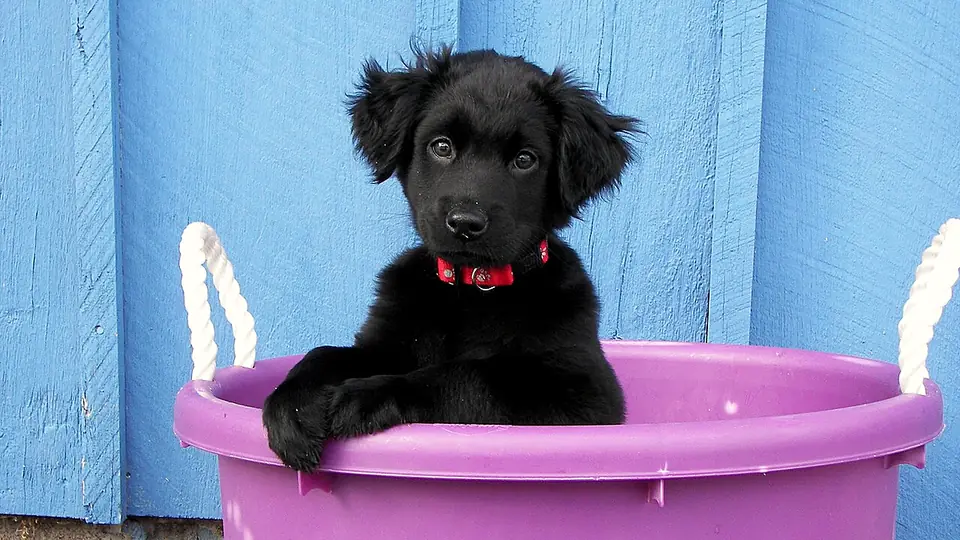
On your puppy's first night home, let it sleep close to you, take it outside just before bed, keep the room calm and dark, plan at least one quiet night-time toilet trip, and comfort it if it cries. The PDSA recommends sleeping in the same room for the first few nights, and says comforting a distressed puppy is fine, because leaving it alone can cause more stress. Your puppy has just left its mother and littermates. Crying on night one is normal homesickness, not bad behaviour.
Before night one: decide where your puppy will sleep
The PDSA's advice is to decide where your puppy will sleep for good before it arrives, and to start that way from the beginning. If you want it to sleep in your bedroom long term, set the bed up there. If you'd rather it sleeps elsewhere, many owners still start with the bed next to theirs and move it gradually.
Wherever you choose, the spot should be:
- quiet and safe, away from the busiest part of the house;
- soft and comfortable, with bedding your puppy can curl up in;
- close enough that you'll hear your puppy wake and need the toilet.
The AKC suggests adding a soft toy or blanket that smells of the puppy's mother; the PDSA also recommends something with the mother's scent, so ask the breeder or rescue for a blanket from the litter.
If you use a crate, rules differ by country. Many guides, including the AKC's, suggest a crate as a den-like bed. In Sweden, by contrast, a dog may not be shut in a crate indoors; a crate at home can only be used as a bed with the door removed or fixed open (SKK). Check what applies where you live.
The first evening: a simple bedtime routine
- Keep the evening calm. The PDSA suggests short play sessions and not giving your puppy the run of the whole house on day one. An overexcited puppy struggles to settle.
- Last meal a while before bed. Puppies usually pass a stool within about half an hour of eating (Royal Kennel Club), so leave time for that before lights out.
- Last toilet trip just before bed. Go out together, wait, and praise quietly when your puppy goes.
- Settle your puppy in its bed. Low light, soft voice, maybe a chew. The Royal Kennel Club notes that puppies love sleeping with cuddly toys and that soft music can help.
- Stay nearby. For the first few nights, the Royal Kennel Club suggests sleeping close, perhaps with an arm or hand in the puppy's bed.
Repeat the same routine every night. The PDSA recommends a consistent bedtime routine, and predictability helps your puppy relax.
When your puppy cries
Expect some crying, especially the first night or two. The Royal Kennel Club explains that it takes time for a new puppy to get used to sleeping alone, and that the homesickness fades as it bonds with you and settles in.
When your puppy cries, ask yourself:
- Does it need the toilet? If it has been a while since the last trip, assume yes and take it out calmly.
- Is it cold, uncomfortable or hungry? Check the bed and the room.
- Is it just lonely? A calm voice or a hand in the bed is often enough. You aren't "rewarding" crying by comforting a scared baby animal; the PDSA is clear that comfort is OK.
What doesn't help: shouting, or getting the puppy out for play. Keep everything low-key so night stays for sleeping.
Night-time toilet trips
Young puppies have small bladders. The Royal Kennel Club says it's unfair to expect a very young puppy to go right through the night, and the PDSA expects night-time toilet needs in the early weeks. To keep these trips easy:
- Set an alarm for a planned trip rather than waiting for crying, so your puppy doesn't have to fail first.
- Carry or lead your puppy straight to its toilet spot. No play, minimal talking.
- Praise quietly when it goes, then straight back to bed.
- As the nights go better, push the planned trip later, then drop it.
For how long puppies can typically hold it at each age, see how often a puppy needs to pee. Our potty schedule tool can plan the last evening trip and morning trip around your bedtime.
The first morning
Go out straight away when your puppy wakes: puppies need to wee immediately after waking, according to the Royal Kennel Club. Then breakfast, another potty trip, and a short, calm play session. Expect your puppy to be tired. Young puppies sleep a great deal (around 18–20 hours a day, according to the AKC and PDSA), so the first days should be mostly rest, short outings to the toilet spot, and gentle getting-to-know-you time. See how much a puppy should sleep for the age-by-age numbers.
Make the first week easier on yourself
The first nights are tiring, and it's hard to remember at 3 a.m. when your puppy last peed. Writing it down helps you spot the pattern quickly. If you log the last toilet trip, bedtime and any night waking in DogsLife, you'll see after a few nights roughly when your puppy tends to wake, and the app's potty predictions can tell you when to set that alarm.
When to call the vet
A new puppy can be unsettled for a few nights, which is normal. Call your vet if your puppy has diarrhoea or vomiting, won't eat, seems very lethargic, struggles to breathe, or cries as if in pain rather than for company.
Frequently asked questions
Should my puppy sleep in my bedroom the first night?
The PDSA recommends sleeping in the same room for the first few nights to help your puppy adjust. Decide early where your puppy will sleep long term and move towards that gradually.
Should I ignore my puppy crying at night?
Not in the first nights. The PDSA says it's OK to comfort a distressed puppy, as leaving it can cause more stress, and the Royal Kennel Club suggests sleeping nearby, perhaps with a hand in its bed.
How many times will my puppy need to go out at night?
It depends on age and the puppy. The Royal Kennel Club says it's unfair to expect a very young puppy to last the whole night, so plan at least one quiet trip at first and adjust as your puppy grows.
How long does the crying last?
There's no fixed timeline. The Royal Kennel Club says the homesickness fades as your puppy bonds with you and gets used to its new surroundings, usually helped by a steady routine.
Sources
- Your first day (and night) with a new puppy — PDSA
- Why does my new puppy cry? — The Royal Kennel Club
- How do I toilet train my dog? — The Royal Kennel Club
- How much do puppies sleep? — American Kennel Club
- Hund i bur (dogs in crates, Swedish rules) — Svenska Kennelklubben (SKK)