 DogsLife
Guide
How much to feed a puppy: label, meals and body condition
There is no single right amount for every puppy. Use the feeding guide on the pack as a starting point, weigh the food, and adjust it to your puppy's body condition and growth.
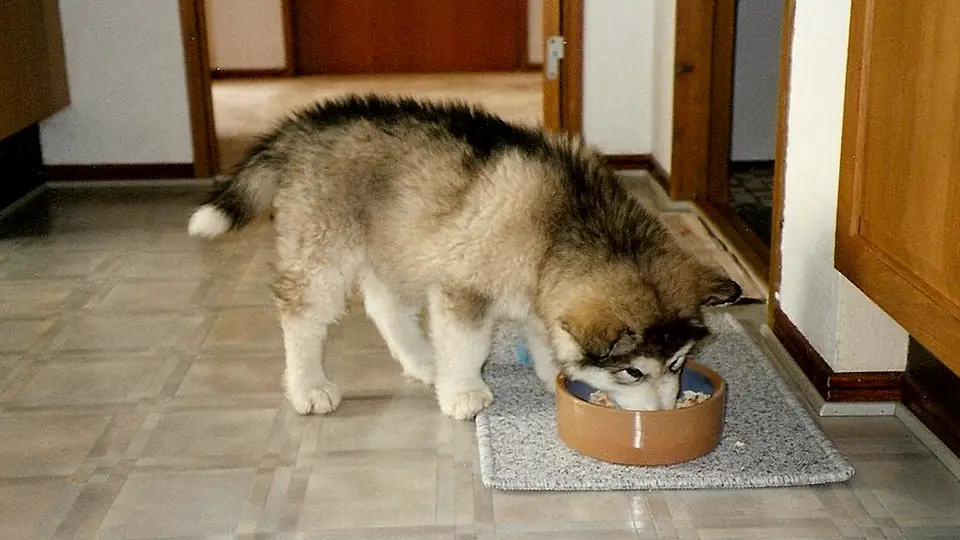
There is no single correct amount of food for a puppy. Start from the feeding guide on your puppy's food for its age and weight, weigh each day's portion, split it into 3–4 meals for a young puppy, and then adjust the amount to keep your puppy lean, checking its body condition and weight regularly (advice from the Royal Kennel Club, PDSA and the AKC). Your vet can confirm the amount at each check-up.
Why there is no magic number
How much a puppy needs depends on the food itself, plus the puppy's age, breed, size, activity level and any medical conditions, as both the Royal Kennel Club and PDSA point out. Two puppies of the same age can need quite different amounts. That is why this guide, like our feeding schedule tool, gives no gram figures: they would be wrong for many puppies. What you can do is follow a simple process and let your puppy's body tell you whether the amount is right.
Step 1: Read the feeding guide on the pack
The Royal Kennel Club says the pet food label gives general guidelines to use as a starting point, and that it is very important to follow the feeding guide on the packaging. PDSA adds that the same guides are often on the maker's website.
Two things to check before you use the number:
- Which weight it is based on. Some packs give amounts for the puppy's current weight, others for its estimated adult weight. If it is adult weight, the Royal Kennel Club suggests asking the breeder how big the parents are.
- That it is the right food. Feed a complete food made for your puppy's age and size (PDSA). For puppies expected to weigh 30 kg or more as adults, the Royal Kennel Club recommends a diet made for large-breed puppies.
When you first bring your puppy home, PDSA suggests keeping the breeder's food and routine for a while and changing gradually, so you are not adjusting food type and amount at the same time.
Step 2: Weigh it, don't scoop it
PDSA recommends measuring portions by weight rather than by eye, and the Royal Kennel Club says a weighed amount gives more precision. Weigh the whole day's amount on a kitchen scale, then divide it between the meals. Check that nobody else in the household is giving extra food on the side, a point PDSA makes too.
Leaving food out all day makes it hard to know how much was eaten, and PDSA notes it can lead to overeating. The AKC suggests fixed meal times and not leaving food down for more than 15 minutes.
Step 3: Split it into meals
The daily amount stays the same however many meals you use; only the portion size changes. Young puppies eat small amounts often, and the number of meals drops with age. The Royal Kennel Club suggests four meals a day from two to three months, two to three from four to six months, and two over six months depending on breed. The AKC gives a similar pattern of four, then three, then two meals by about 6–12 months.
Our puppy feeding schedule calculator turns your puppy's age and your day into meals per day and example meal times, using these sources.
Step 4: Count treats as food
Treats and training rewards add up quickly. The Royal Kennel Club says treats shouldn't exceed 10% of a puppy's daily calorie intake, and PDSA's vets give the same 10% limit for dogs in general. Two easy ways to stay inside it:
- Use some of the weighed daily kibble as training rewards, as PDSA suggests.
- When you do give extra treats or dental chews, reduce the meals slightly to make room, as both PDSA and the Royal Kennel Club advise.
The AKC adds: keep training treats as small as possible.
Step 5: Check body condition, not the bowl
The AKC's rule is to watch the dog, not the dish. Body condition, not what is left in the bowl, should decide portion sizes. Vets use a body condition score; the WSAVA chart for dogs runs from 1 to 9 with ideal in the middle. At the ideal end of the chart, a dog has:
- ribs you can feel without excess fat covering them;
- a waist you can see behind the ribs when you look from above;
- a belly that tucks up when you look from the side.
If the ribs are hard to feel and the waist has disappeared, your puppy is carrying too much. If the ribs, spine and hip bones are easy to see, it may be too thin. Ask your vet to show you how to check, and to score your puppy at vaccination visits (see the vaccination schedule).
Step 6: Weigh your puppy and adjust
The Royal Kennel Club says regularly weighing your puppy helps you check it is growing at a healthy rate for its age, size and breed, and suggests puppy growth charts to track it. PDSA's vets recommend weighing pets regularly alongside checking body condition, and changing the amount depending on whether your pet needs to gain, lose or stay the same. PDSA also reminds owners to keep adjusting portions as their puppy grows.
A practical loop: weigh your puppy at a regular interval, note its body condition, and change the daily amount in small steps. If your puppy keeps leaving food or picking at it, the AKC says that can be a sign you are feeding too much.
Why overfeeding matters
Fast weight gain is not a sign of a healthy puppy. The AKC warns that extra weight raises the risk of joint problems in young dogs and can lead to diabetes and other health issues. The Royal Kennel Club says overfeeding and excessive weight gain in large breeds is a risk factor for developmental orthopaedic conditions such as hip dysplasia. PDSA's Weigh Up campaign stresses keeping puppies at a healthy weight from the day you bring them home.
When to ask your vet
Ask your vet or vet nurse whenever you are unsure how much to feed; PDSA says needs vary too much for one answer, and many practices run nurse-led weight clinics. Check with your vet (and breeder) before changing your puppy's diet, as the AKC advises, and make any switch gradually. Get advice too if your puppy's weight or body condition moves away from ideal despite adjusting the amount, since PDSA notes a very overweight pet may need a specific diet and tests for an underlying condition.
Frequently asked questions
How many grams should my puppy eat a day?
That depends on the food, your puppy's age, breed, size and activity, so no general number fits. Read the feeding guide on your puppy's food for its age and weight, weigh that amount each day, and adjust with your vet. PDSA's vets say there is no magic number.
Is the amount on the bag for my puppy's current weight or adult weight?
It varies by food. The Royal Kennel Club says to check which one your pack uses; if it is based on expected adult weight, ask the breeder how big the parents are.
How much of the daily food can be treats?
The Royal Kennel Club and PDSA both say treats shouldn't make up more than 10% of the daily intake. Cut meals a little to make room for them, or use part of the daily kibble as training rewards.
How do I know if my puppy is the right weight?
Feel and look. On the WSAVA body condition chart, an ideal dog has ribs you can feel without excess fat, a waist behind the ribs seen from above and a tucked-up belly seen from the side. Weigh your puppy regularly and ask your vet to check its shape at visits.
Sources
- Puppy nutrition — The Royal Kennel Club
- Puppy feeding tips — The Royal Kennel Club
- Vet Q&A: How much should I feed my dog or cat? — PDSA
- Your dog's diet — PDSA
- Puppy diet and behaviour — PDSA
- Puppy feeding fundamentals — American Kennel Club
- Global Nutrition Guidelines and toolkit — World Small Animal Veterinary Association (WSAVA)
- Body Condition Score charts, dogs and cats — World Small Animal Veterinary Association (WSAVA)